The hidden work behind every trailer you've watched
A trailer drops on a Thursday morning and you've decided about the film by evening. What you don't see is the three weeks before that Thursday.
You've seen hundreds of them. Maybe thousands. A trailer drops on a Thursday morning, you watch it twice before lunch, and by evening you've already decided whether you're booking tickets for opening weekend.
What you don't see is the three weeks before that Thursday.
Film packaging, the trailers, the posters, the motion graphics, the teaser that gets clipped into a fifteen second Instagram reel, is one of the least understood parts of the film industry, even though it's the part every single viewer interacts with first. Nobody watches a film without watching its trailer. Very few people buy a ticket without seeing a poster. And yet the work that goes into building those two minutes of footage rarely gets talked about outside the industry itself.
We've spent the last few years inside that process, across more than 80 films in five languages: Telugu, Kannada, Tamil, Malayalam, and Hindi. Here's what that work actually looks like.
A trailer isn't a highlight reel
The most common misunderstanding about trailer editing is that it's just "cutting the best scenes together." It isn't. A film might have 400 shots that could theoretically go into a trailer, and using the best ones in the wrong order will kill it just as fast as using mediocre ones in the right order.
A trailer has to do something a film doesn't have to do: convince a stranger, in under three minutes, who has never met these characters and doesn't know this world, that they should care. That's a completely different job from storytelling. It's persuasion, built out of story.
This means the trailer editor is often making decisions the director never had to make: what to reveal, what to hide, where the one moment goes that makes someone in a theatre gasp when they see the teaser on a big screen for the first time. Get the reveal wrong and you've either given away the film or given audiences nothing to be curious about.
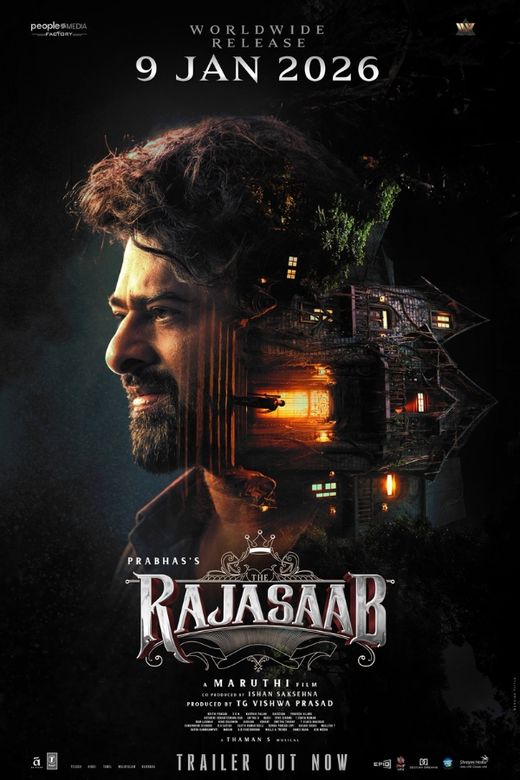
The poster has about two seconds to work
Scroll through Instagram for ten seconds and count how many posters you actually looked at versus how many you scrolled past without registering. That's the real test a film poster has to pass, not "does this look good in a design portfolio," but "does this stop a thumb mid scroll on a phone screen, at low resolution, next to fifty other things competing for attention."
Key art design for films is closer to advertising than to traditional graphic design. Every choice, the actor's expression, the typography of the title, whether there's a tagline or just a face, is being made against a two second attention window. A poster that looks stunning full screen on a laptop but disappears into noise on a phone has failed at its actual job.
Motion graphics do the quiet work nobody notices
Title animations, lyrical videos, the way a hero's name builds on screen with a specific rhythm timed to the background score, this is where audiences feel something is "cinematic" without being able to explain why. Good motion graphics work is invisible. You don't think "that was well animated." You just think the film felt big.
This is also where a lot of regional cinema in India has quietly caught up to, and in places overtaken, bigger budget expectations. A mid budget Telugu or Kannada film today can carry motion graphics work that would have needed a Bollywood sized budget five years ago, because the tools and the talent pool have both matured fast.
Why this work is starting to matter more, not less
Ten years ago, a film's packaging was mostly a theatrical concern: one trailer, a handful of posters, done. Today, a single film needs a theatrical trailer, an OTT cut trailer, teaser variants for four or five languages, motion posters for Instagram, static key art for outdoor and print, character posters for individual fan bases, and short form cuts built specifically for algorithms that reward the first three seconds of a video.
That's not one deliverable anymore. It's a small production pipeline of its own, running in parallel with the film's actual release schedule, often under tighter deadlines than the film itself had.
It's a discipline that sits at the intersection of editing, design, marketing psychology, and increasingly, AI assisted tools for previsualization and concept work. It's also one that's earned much more respect over the last few years than it used to get, because audiences have gotten sharper. A generic trailer gets called out publicly within hours now. A generic poster gets memed. The bar has gone up because the audience got more visually literate, not less.
The part people forget
None of this replaces the film. A trailer can't save a bad film, and it shouldn't be expected to. But a weak trailer can absolutely bury a good one before audiences ever give it a chance. In an industry where a film's opening weekend can decide its entire commercial fate, the two minutes before the film even releases carry more weight than they get credit for.
The next time a trailer makes you sit up in your chair, or a poster makes you stop scrolling, that was not an accident. Someone spent three weeks making sure it was not.